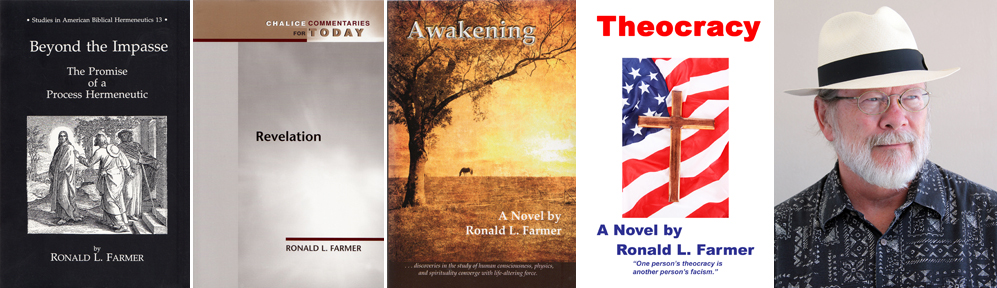
 Born and raised in a rural, county seat town in Oklahoma, my childhood centered on three interests: the arts, science, and animals. Guymon High School had tremendous musical programs that almost always won the sweepstakes award in regional and state competitions. I played trumpet in the concert, jazz, and marching bands as well as the orchestra; sang (baritone/bass) in the choir and the male chorus; and played guitar in local rock groups. My artistic side also manifested itself a love of literature; in addition to being a voracious reader, I tried my hand at poetry and short stories. (Fortunately, all extant manuscripts of my childhood and adolescent forays into the
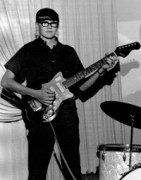
 literary realm are in my possession, so they can’t be used to embarrass me!) Unlike some with an artistic bent, I found science fascinating, so much so that I enrolled in every science course the high school offered. In addition to a love of the arts and an attraction to the wonders of science, my worldview was profoundly shaped by caring for my family’s menagerie—cats, dogs, parakeets, tropical fish, horses, cattle, and even a goat. Yes, my childhood was well-rounded.
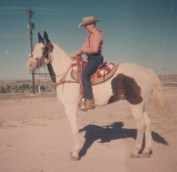
During my collegiate years, my fascination with science initially trumped my love for the 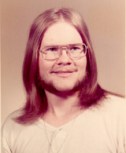 arts and humanities. As a pre-med student, I devoted my undergraduate career to the study of psychology, chemistry, and mathematics. During my senior year, however, I experienced a spiritual awakening that altered my academic plans. Rather than attending medical school, as everyone expected, I pursued graduate study in religious studies—M.Div. with ordination and a Ph.D. in New Testament studies, with a focus on hermeneutics.
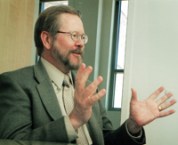 Following graduate school, I embarked on a career with twin foci: the academic study of religion and campus ministry. For a decade I taught in the religious studies department at the University of Missouri, where I also began my writing career.
  The next five years found me in Cincinnati, serving with my wife, Patricia Adams Farmer, as co-ministers of a progressive congregation, The Walnut Hills Christian Church (Disciples of Christ). While there, I also helped establish and then chaired a religious studies program at the University of Cincinnati.
 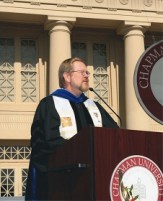 In 1997 I moved to Southern California to envision and create an innovative interfaith program for the 21st Century. I was privileged to serve as the inaugural Irvin C. and Edy Chapman Dean of the Wallace All Faiths Chapel of the Fish Interfaith Center at Chapman University, a position which also included an appointment as an Associate Professor of Religious Studies.
In January 2011, I moved to the central coast of Ecuador for an extended, five-year sabbatical. I have continued my affiliation with Chapman University by creating and teaching online religious studies courses for Brandman University, a member of the Chapman University System. U.S. News and World Report ranked Brandman’s online baccalaureate program #8 in the United States, which indicates the caliber of my colleagues and students.
After our five-year adventure in Ecuador, we returned to the States where Patricia and I both serve as ministers of Christian Church (Disciples of Christ) congregations in mid-Missouri: Oakland Christian Church and Millersburg Christian Church. We have also revived our musical roots by both studying classical guitar. How wonderful it is to once again be making music!
Given the contours of this autobiographical sketch, it should not be surprising that I have written books and articles for both the academic and the general reader. My first book, Beyond the Impasse: The Promise of a Process Hermeneutic (1997), is a scholarly exposition of this promising interpretive strategy intended for scholars, clergy, and graduate students. My second book, Revelation (2005), a commentary on the Bible’s most notorious book, targets clergy, undergraduate students, and general readers.
In writing the novel Awakening (2009), I merged the academic study of religion and philosophy, my love of the arts, and my fascination with science. The novel should especially appeal to fans of the late Michael Crichton, Daniel Hecht, Douglas Preston, Lincoln Child, and similar writers who combine science and philosophy in a suspenseful setting with significant ethical consequences. Theocracy (2016), my latest novel, focuses on a growing extremist movement at work in both US religious and political life. Although radical Islamic fundamentalism dominates the news, this radical Christian fundamentalism is more dangerous because it is homegrown.
I am currently working on a book tentatively entitled The Dawn of a New Axial Age: A Constructive Postmodern Re-Imagining of Religion. The book not only diagnoses the root of religious decline in the United States, but also sets forth an imaginative proposal for revitalization.
I am also working on a novel that would be a progressive Christian response (i.e., an antithesis!) to the fundamentalist “Left Behind” series. The novel, tentatively entitled The Patmos Palimpsest, would draw upon my academic study of The Revelation to John and my time on Patmos, “The Holy Island of the Aegean” as the Greeks call it.
A Debt of Gratitude: My Mentors
Each of us is the product of our many relationships, but in reflecting back over the course  of my intellectual and spiritual development, certain people stand out as having had special influence. These are my mentors.
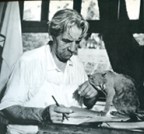 I was not fortunate enough to know two of these mentors personally (I was born too late), but the intellectual legacies of these giants are key to understanding the worldview I have embraced: Alfred North Whitehead, for his seminal work in process philosophy, and Albert Schweitzer, for his “Reverence for Life” ethic.
Others who have profoundly “gifted” me with their writings, lectures, and friendship include: William A. Beardslee (hermeneutics and New Testament), John B. Cobb, Jr. (theology), David Ray Griffin (philosophy), Marjorie Hewitt Suchocki (theology), Russell Pregeant (hermeneutics and New Testament), and David Lull (hermeneutics and New Testament). I also owe a special debt to my colleagues over the past quarter century in the various manifestations of the Society of Biblical Literature’s seminars and sections devoted to the study of apocalyptic literature in general and the Revelation to John in particular. For most of those years two individuals have graciously given of their time to chair the groups, David L. Barr and Paul B. Duff.
 Ronald L. Farmer
Hi, Ron and Patricia! Welcome back to the U.S.–we need you desperately in these dangerous times! Glad to see you continue to produce good stuff.